 Слове́нія
 Ірла́ндія
 Іспа́нія
 Іта́лія
 Австралія
 Австрія
 Албанія
 Аргентина
 Бельгія
 Болгарія
 Боснія і Герцеговина
 Бразилія
 Греція
 Данія
Данія
 Естонія
 Канада
 Колумбія
 Ла́твія
 Литва́
 Люксембу́рг
 Мексика
 Молдова
 Нова Зеландія
 Норвегія
 Нідерланди
 Німеччина
 По́льща
 Португа́лія
 Південна Африка
 Північна Македонія
 Руму́нія
 Сербія
 Слова́ччина
 Сполучене Королівство
 Сполучені Штати Америки
 Туреччина
 Уго́рщина
 Україна
 Фра́нція
 Філіппіни
 Фінля́ндія
 Хорватія
 Че́ська Респу́бліка
 Чилі
Чилі
 Чорногорія
 Шве́ція
 Швейцарія







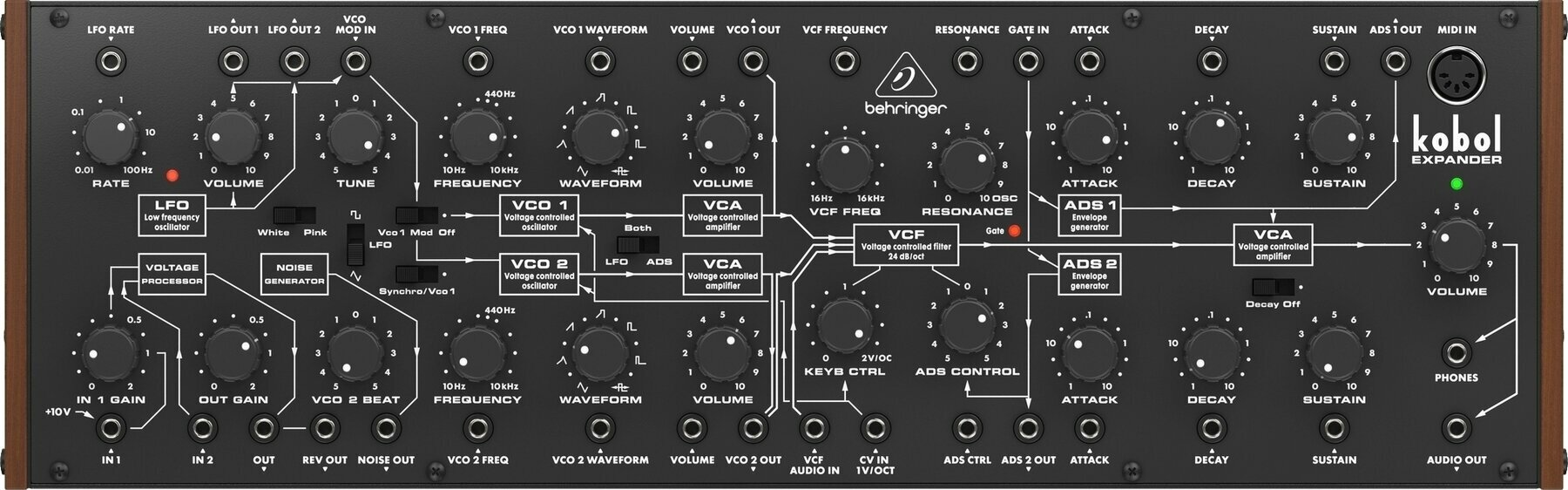
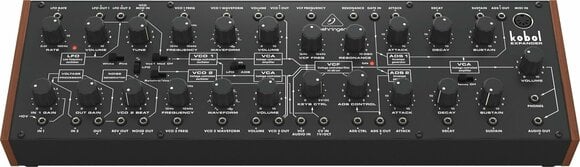
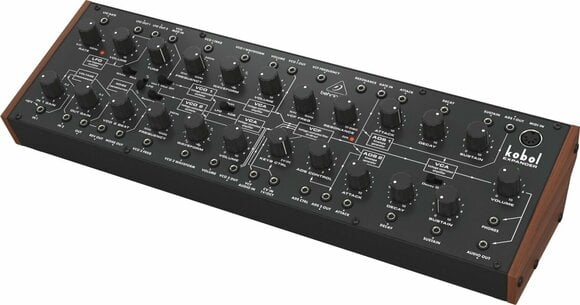
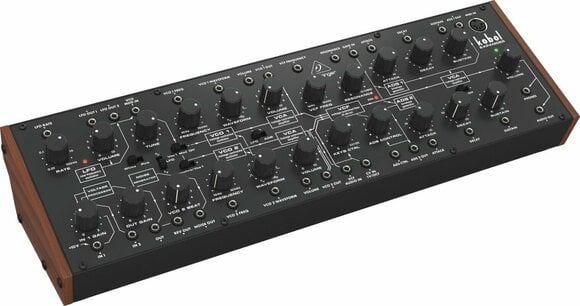
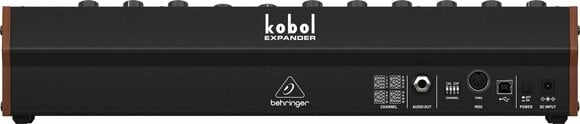

Behringer Kobol Expander Синтезатор
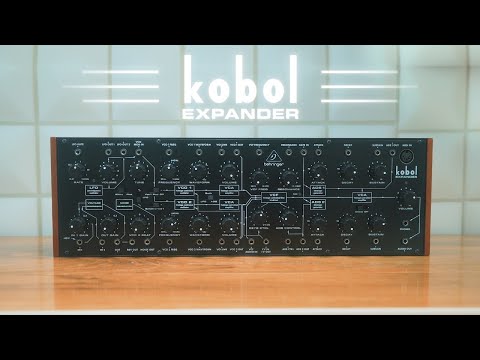
The Behringer Kobol Expander is a duophonic semi-modular analog synthesizer that revives the rare RSF Kobol from late-1970s France. Two analog VCOs morph continuously through seven waveshapes, while a unique 4-pole VCF adds the saturated character the original was loved for. With 32 patch points, Eurorack-ready housing, and MIDI/USB connectivity, it slots into any studio or modular rig.
- Two analog VCOs with seven continuously morphing waveshapes for duophonic sound design
- 4-pole Kobol VCF delivers the naturally saturated tone that defined the original French synth
- 32 CV patch points plus Eurorack-compatible housing for deep modular integration
- Analog LFO, dual ADS envelopes, noise generator, and voltage processor for hands-on shaping
Behringer Kobol Expander — Duophonic Analog Synthesizer with 7 Morphing Waveshapes
Built around two analog VCOs that morph continuously through seven waveshapes, the Behringer Kobol Expander is a duophonic semi-modular analog synthesizer inspired by the rare RSF Kobol from late-1970s France. It revives the saturated character that made the original a favorite of Vince Clarke, Daniel Miller, and Depeche Mode. The Kobol Expander is the right choice for players who want genuine 1970s analog tone with modern semi-modular flexibility.
What Sets the Kobol Expander Apart
Unlike most reissues that lean on standard 3340 oscillator chips, this model uses a discrete transistor architecture with TL04 op amps and V13700 OTAs to emulate the original RSF tempco wave generators. The unique 4-pole "Kobol" VCF produces the natural saturation that gives the synth its voice, while 32 CV patch points open up modulation routings beyond a typical semi-modular.
Two Analog VCOs with Continuous Waveform Morphing
The dual VCO architecture gives players two independent voices to layer, sync, or detune. Each oscillator sweeps through seven waveshapes on a single continuous knob, so the timbral shift from triangle to sawtooth to PWM happens in real time.
- Polyphony: 2 voices — duophonic layering from two independent VCOs
- Oscillators: 2 analog VCOs with seven morphing waveshapes and oscillator sync
- Pulse-width modulation: Yes — built into the waveform morph for evolving PWM tones
4-Pole Kobol VCF, LFO, and ADS Envelopes
The 4-pole low-pass filter is the heart of the Kobol sound, adding the warm saturation that distinguishes it from standard ladder designs. Modulation sources include an analog LFO with two waveforms, two ADS envelopes, a noise generator with white and pink outputs, and a voltage processor for scaling control voltages.
- Filter: 4-pole VCF with resonance and natural saturation character
- LFO: 1 analog LFO with two selectable waveforms and multiple destinations
- Envelopes: 2 ADS envelopes for shaping amplitude and modulation
Eurorack-Ready with MIDI, USB, and 32 Patch Points
Designed to drop into a standard Eurorack case, this unit ships with a ribbon power connector and removable housing. The I/O covers vintage and modern setups with 5-pin DIN MIDI in and thru, USB-B, a 3.5 mm headphone output, and a 6.3 mm main audio output.
- Inputs: MIDI IN via 16-channel 5-pin DIN
- Outputs: 3.5 mm headphone, 6.3 mm jack, USB-B, MIDI Thru
- Patch points: 32 CV patch points for semi-modular and Eurorack patching
Who Should Buy the Behringer Kobol Expander
The Kobol Expander is the right choice for synth players who want the character of a rare late-1970s French analog at a home-studio price. It suits electronic musicians exploring duophonic bass lines and leads, plus Eurorack builders who want a discrete analog voice with deep modulation routing. Players with a MIDI sequencer will appreciate the built-in MIDI and USB-B, while modular users can integrate it via the 32 patch points.
The RSF Kobol Legacy
The original RSF Kobol was a French boutique synthesizer produced in very small numbers, with the keyboard version arriving in 1978 and the expander following in 1979 as a more affordable Minimoog alternative. RSF instruments — including the Kobol and Poly KB — found their way onto Depeche Mode and Vince Clarke recordings. The Behringer reissue revives that lineage with discrete transistors emulating the original tempco wave generators.

LFO
Конверт
ADS (2 )
Осцилятори
Арпеджіатор
Інтерфейс MIDI
Bluetooth
Вихід для навушників
Вхідні дані
Виходи
Педальні входи
USB MIDI
Секвенсор
Ні
Вміст пакета
Блок живлення
Адаптер


Усі відгуки залишають перевірені клієнти, які вже купували у нас товари в минулому.
AI-підсумок відгуків
На основі кількості відгуків: 15
Переваги
- Якість звуку: Клієнти постійно відзначають потужні та різноманітні звукові можливості, починаючи від чистих педів і закінчуючи перкусивними звуками та м'яким басом, часто вигідно порівнюючи його з дорожчими інструментами.
- Співвідношення ціни та якості: Багато рецензентів вважають цей синтезатор видатним вибором, пропонуючи високоякісний аналоговий звук та широкий спектр функцій за дуже конкурентною ціною.
- Простота використання: Користувачі вважають синтезатор простим у вивченні та використанні, з чітким маркуванням та ручками правильного розміру, що полегшує експерименти та створення звуку.
- Можливості модуляції: Велика кількість точок патчів та широкі можливості модуляції дозволяють проводити широкий звуковий дизайн та дослідження, що робить його чудовим вступом у світ модульного синтезу.
Недоліки
- Обмежена кількість аксесуарів: Продукт містить лише два патч-кабелі, яких деякі користувачі вважали недостатньо для негайних масштабних експериментів.
- Немає вбудованих функцій: Синтезатору бракує поліфонії, налаштувань ковзання/портаменто, вбудованих ефектів, клавіатури чи секвенсора, що вимагає додаткового обладнання для повного налаштування.
Що повторюють клієнти
Підсумок
Документи
Інструкції з використання
Інформація про виробника
Інструкції з техніки безпеки
Будь ласка, звернися до посібника користувача, щоб отримати конкретні інструкції з техніки безпеки для цього виробу


