 Слове́нія
 Ірла́ндія
 Іспа́нія
 Іта́лія
 Австралія
 Австрія
 Албанія
 Аргентина
 Бельгія
 Болгарія
 Боснія і Герцеговина
 Бразилія
 Греція
 Данія
Данія
 Естонія
 Канада
 Колумбія
 Ла́твія
 Литва́
 Люксембу́рг
 Мексика
 Молдова
 Нова Зеландія
 Норвегія
 Нідерланди
 Німеччина
 По́льща
 Португа́лія
 Південна Африка
 Північна Македонія
 Руму́нія
 Сербія
 Слова́ччина
 Сполучене Королівство
 Сполучені Штати Америки
 Туреччина
 Уго́рщина
 Україна
 Фра́нція
 Філіппіни
 Фінля́ндія
 Хорватія
 Че́ська Респу́бліка
 Чилі
Чилі
 Чорногорія
 Шве́ція
 Швейцарія







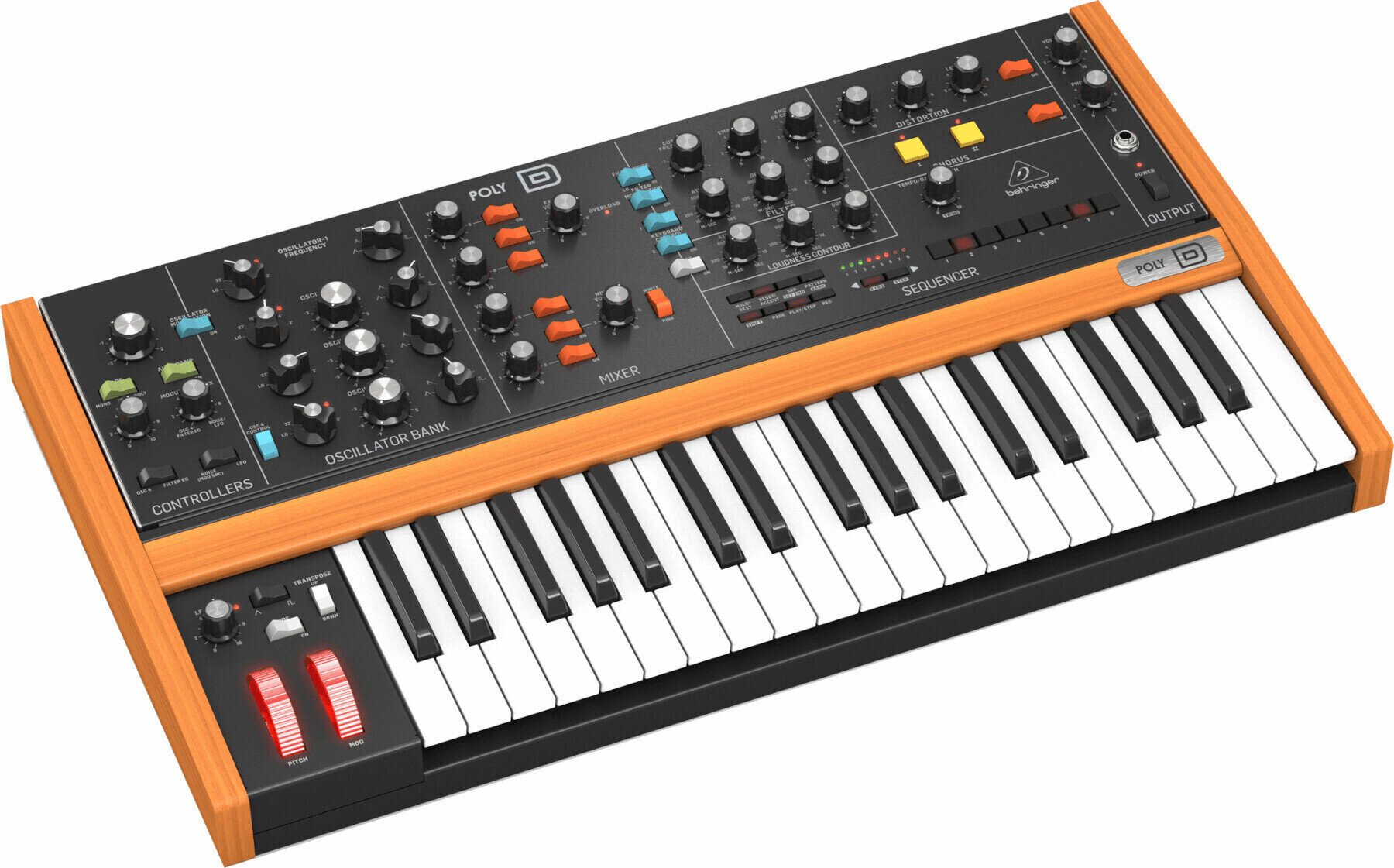
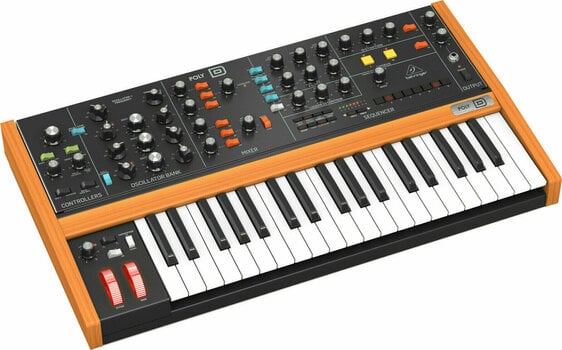
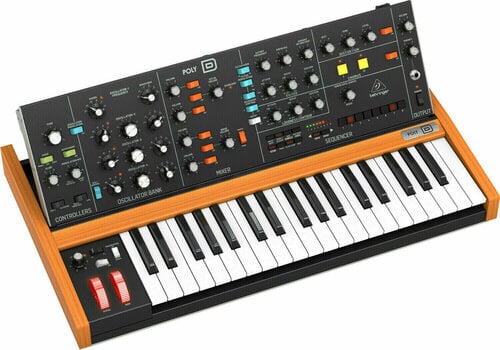
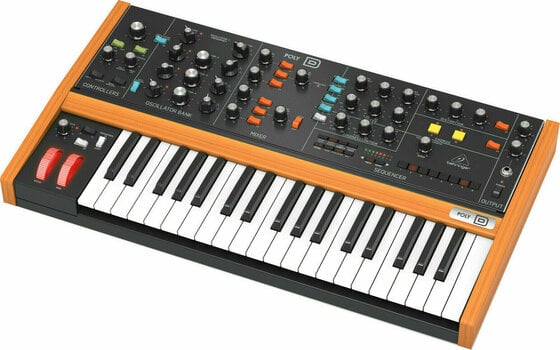

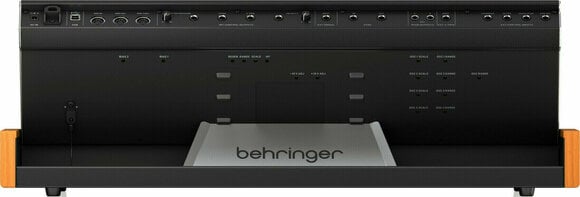
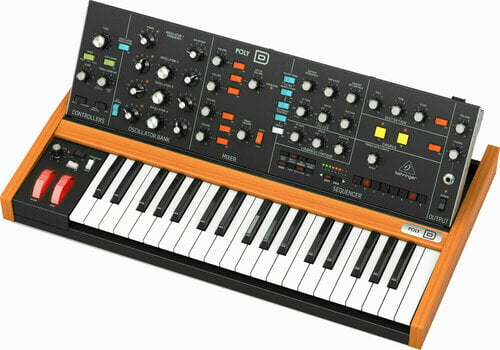

Behringer POLY D Синтезатор
The Behringer POLY D is an analog 4-voice polyphonic synthesizer that pays tribute to the iconic 1971 Minimoog Model D while adding modern features like a fourth oscillator, BBD stereo chorus, and onboard sequencer. With 37 full-size velocity-sensitive keys, an authentic 24 dB ladder filter, and a pure analog signal path, it delivers the fat basses and searing leads that defined progressive rock and synth-pop. Switchable Mono, Poly, and Unison modes let one player cover everything from expressive solos to lush chord pads.
- Four independent analog VCOs with five selectable waveforms each, spanning a six-octave range for massive sound design flexibility.
- Classic 24 dB ladder filter with switchable low-pass and high-pass modes plus dedicated envelope shaping for vintage character.
- Built-in 32-step sequencer and arpeggiator with 64 patterns across 8 banks, ready for hands-off performance and studio work.
- J60-modeled BBD stereo chorus and DS1-modeled analog distortion add width and grit without external pedals.
Behringer POLY D Analog Polyphonic Synthesizer — Four Voices of Classic Analog Power
The Behringer POLY D is a 4-voice analog polyphonic synthesizer built around the legendary architecture of the 1971 Minimoog Model D, expanded with modern performance features for today's keyboardists. Its pure analog signal path runs through authentic VCO, VCF, VCA, and ladder filter circuits, giving players the same fat basses, blistering leads, and progressive organ tones that defined an era of music. The POLY D is the right choice for synthesists who want genuine analog sound and real-time knob-per-function control without menu diving.
Four VCOs, Three Modes, and a Ladder Filter at the Core
What separates the POLY D from a standard mono reissue is its fourth voltage-controlled oscillator and switchable Mono, Poly, and Unison modes, letting a single instrument cover expressive leads, four-note chord harmonies, and stacked unison thickness. The 24 dB ladder filter with switchable low-pass and high-pass operation, plus dedicated Attack, Decay, and Sustain envelope controls, sits at the heart of its sound. J60-modeled BBD stereo chorus and DS1-modeled analog distortion circuits are integrated directly into the signal path, expanding the tonal palette without external pedals.
Keyboard, Polyphony, and Performance Controls
The 37-key semi-weighted keyboard with full-size keys, velocity sensitivity, and aftertouch gives performers expressive control over dynamics and modulation in real time. Four voices of polyphony, combined with the dedicated modulation wheel, pitch wheel, and glide control, make this instrument equally suited to studio composition and live performance. Players can route aftertouch, velocity, pitch, and V-Trigger signals out through dedicated 1/4" jacks to interface with modular gear and external processors.
- Keys: 37 full-size, semi-weighted — full-size keys with velocity and aftertouch for expressive playing
- Polyphony: 4 voices — plus Mono and Unison modes for one-voice leads and stacked thickness
- Aftertouch: Yes (After Pressure) — dedicated output jack with sensitivity control
- Modulation: Pitch and Mod wheels, Glide — classic performance controls for bending and vibrato
Oscillators, Filter, and Sound Engine
Four analog voltage-controlled oscillators form the sound source, each offering five selectable waveforms across a six-octave range (LO, 32', 16', 8', 4', 2'). OSC 1, 2, and 3 share triangular, triangular/saw, saw, square, wide pulse, and narrow pulse options, while OSC 4 adds a reverse saw wave and can be switched out of keyboard control to act as a fifth modulation source. The 24 dB ladder filter with switchable low-pass and high-pass modes, plus dedicated envelope shaping, gives the POLY D its signature vintage character.
- Oscillators: 4 analog VCOs — five waveforms each, six-octave range for deep sound design
- Filter: 24 dB Ladder, switchable LP/HP — vintage Moog-style tone with adjustable Emphasis and Contour
- LFO: 1 triangle/square wave — for slow filter sweeps and rhythmic modulation effects
- Envelope: ADS — Attack, Decay, and Sustain shaping for both VCA and VCF
Sequencer, Effects, and Connectivity
The onboard 32-step sequencer with 64 patterns across 8 banks, plus a built-in arpeggiator, makes the POLY D a self-contained performance and composition tool. Integrated BBD stereo chorus and analog distortion circuits add movement and grit without needing external effects. Full MIDI In/Out/Thru via both 5-pin DIN and USB Type B, plus dedicated control voltage inputs and outputs, allow deep integration with modular systems and DAW-based studios.
- Sequencer: 32 steps, 64 patterns, 8 banks — plus arpeggiator for generative performance
- Effects: BBD Stereo Chorus, analog Distortion — J60- and DS1-modeled circuits built into the signal chain
- MIDI: In/Out/Thru via USB and 5-pin DIN — class-compliant USB 2.0 for direct DAW integration
- Controls: 84 total knobs and switches — hands-on, menu-free operation
Who Is the Behringer POLY D For?
The POLY D is the right choice for synth players and producers who want classic analog tone with the flexibility of true polyphony at a working musician's price. It suits electronic music producers building basses and pads, learners exploring subtractive synthesis without menu diving, and live performers needing a road-ready instrument with wood-trimmed vintage aesthetics and 84 dedicated controls. Keyboardists coming from digital workstations will appreciate the immediate, hands-on workflow, while vintage synth enthusiasts get the ladder filter character and four-oscillator architecture that defined the original Model D era.
Behringer and the POLY D Story
Behringer was founded by Uli Behringer, born in 1961 in Baden, Switzerland, who built his first synthesizer, the UB-1, at age 17 before going on to establish the company. The POLY D draws directly on the 1970s portable analog synthesizer era, when artists like Jan Hammer, Chick Corea, Rick Wakeman, Jean-Michel Jarre, Isao Tomita, and Keith Emerson shaped the sound of progressive rock and electronic music. By adding a fourth oscillator, polyphonic capability, BBD chorus, distortion, and a 32-step sequencer to the original Model D concept, the POLY D brings that legacy into a modern performance instrument.
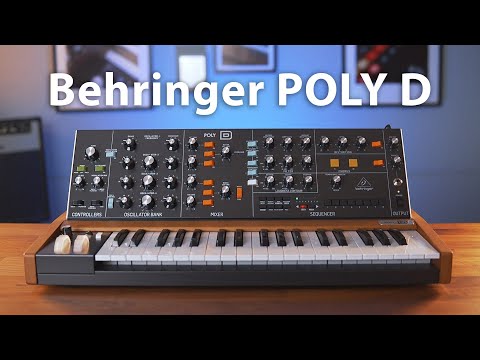

Тип
Клавіатурний синтезатор
Aftertouch
LFO
Конверт
ADS (2 )
Осцилятори
Модуляція
Арпеджіатор
Типи ефектів
Інтерфейс MIDI
Bluetooth
Звуковий двигун
Кількість ключів
Тип клавіатури
Synth Action, Чутливий до швидкості
Розмір ключа
Standard
Поліфонія
Висотна смуга
Так
Носій запису
колір
Вихід для навушників
Вхідні дані
Виходи
Педальні входи
USB MIDI
Фільтр
Низький прохід, Високих частот
Секвенсор
Так
Блок живлення
Адаптер
Адаптер в комплекті
Ширина (см)
64,7
Висота (см)
8,9
Глибина (см)
36
Bага
11,5 kg
Вага нетто (кг)
10,2
Країна походження
Китай


Усі відгуки залишають перевірені клієнти, які вже купували у нас товари в минулому.
AI-підсумок відгуків
На основі кількості відгуків: 21
Переваги
- Автентичний аналоговий звук: Клієнти постійно хвалять якість звуку синтезатора, відзначаючи його близьку схожість з оригінальним Minimoog та його придатність для аналогової музики.
- Виняткова цінність: Багато рецензентів підкреслюють доступність продукту, стверджуючи, що він пропонує чудовий звук та функції за свою ціну, що робить його «найкращою покупкою» для багатьох.
- Якість збірки: Синтезатор описується як такий, що має міцну та високоякісну конструкцію, з компонентами, які відчуваються міцними та добре підігнаними.
- Універсальні режими відтворення: Інструмент пропонує поліфонічний та монофонічний режими, причому поліфонічний режим підходить для створення звуків педів, а монофонічний режим можна порівняти з Minimoog з додатковими голосами.
- Потужний секвенсор: Вбудований секвенсор значно розширює можливості пристрою, незважаючи на те, що деякі користувачі вважають його роботу складною.
Недоліки
- Проблеми з якістю збірки: Деякі користувачі повідомляли про проблеми з фізичною якістю, такі як нещільно закріплені поворотні перемикачі та відсутність декоративних деталей після доставки, що свідчить про непослідовний контроль якості.
- Складний інтерфейс користувача: Робота секвенсора зазначається як складна, а інструкція користувача вважається некорисною для початківців, що ускладнює навчання деяким функціям.
- Обмежене керування хорусом: Ефект хоруса, хоча загалом подобається, не має регульованих параметрів, таких як керування «вологим/сухим», а друге налаштування хоруса сприймається як надмірне.
Що повторюють клієнти
Підсумок
Документи
Інструкції з використання
Інформація про виробника
Інструкції з техніки безпеки
Будь ласка, звернися до посібника користувача, щоб отримати конкретні інструкції з техніки безпеки для цього виробу


